
Selected with the data sheet
Air flow, capacity, fresh air and static pressure calculated for your building, with the model and its data sheet in the proposal.
Supply, installation and replacement of rooftop units in Malaga for warehouses, supermarkets, gyms, events venues and shopping centres. Roof frame, crane lift, ductwork, electrics and commissioning, all by our own technicians. Then a maintenance contract, so the machine on your roof is never the thing that stops your business.
A rooftop unit is a self-contained air-to-air packaged unit: compressors, coils, fans and controls in a single casing that sits on the roof of the building. It takes in air (return air and outside air), cools or heats it and pushes it through a duct network to the space below. It leaves the factory with its refrigerant charged and tested, and needs no indoor units and no refrigerant pipework running through the building.
It is the machine for large buildings with a flat roof: industrial units and warehouses, supermarkets and hypermarkets, gyms, events venues, large restaurants, shopping centres and sports halls. ITAFE supplies, installs, replaces and maintains rooftop air conditioning and high-capacity plant across the province of Malaga, with our own technicians since 2010.
This page sits under our main page on industrial air conditioning in Malaga. If you are weighing up rooftop against VRF or a chiller, the full comparison is there. Everything about rooftop units is here.
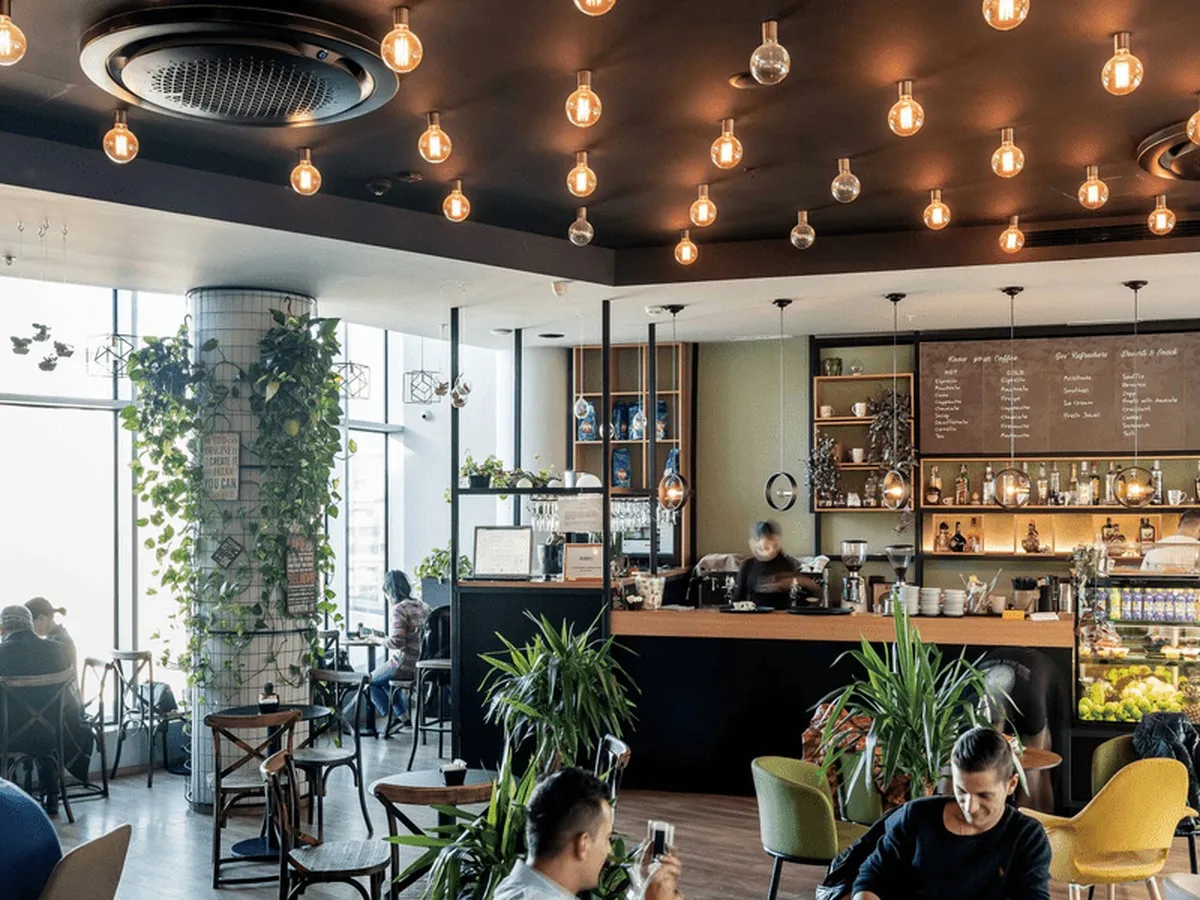
Compared with a VRF system or several ducted units spread around, a rooftop unit wins in buildings with volume. All the plant is on the roof: no false ceilings or plant rooms taken up, no refrigerant pipework running through the building (fewer potential leak points and less gas to declare under F-Gas rules) and all the maintenance concentrated in one accessible place. Installation is quicker than an equivalent VRF because the unit arrives assembled and factory-tested.
It also does, as standard, what other systems need extra kit for: fresh air (mixing outside air with return air according to demand) and free-cooling, which means cooling with outside air alone whenever it's cooler outside than in, without starting the compressors. In Malaga, with mild nights and long shoulder seasons, a well-controlled rooftop unit with free-cooling saves a lot of compressor hours a year in a gym or a supermarket that opens early.
A rooftop unit conditions one large area to one temperature. If the building has lots of rooms with different uses and hours (hotel, cellular offices, clinic), VRF with room-by-room control does the job better. If there is no accessible roof or the structure can't take the weight, there are versions for ground or plant-room installation with a centrifugal fan, but it needs studying. And if your process needs chilled water, the answer is a chiller. We'll tell you on the site visit: we sell the machine that fits, not the heaviest one.
Choosing a rooftop unit isn't choosing kilowatts. It means choosing air flow, cooling and heating capacity, fresh-air rate and available static pressure for the ductwork. We start from the real heat load of the building (floor area, height, insulation, orientation, glazing, occupancy, machinery and lighting), the outdoor air rate Spanish regulations (RITE) require for the use and occupancy, and the hours of operation. From there we select the unit, the number of zones if it runs with dampers, and the type of fan.
Manufacturers' ranges go from units for a medium-sized shop to machines of several hundred kW for sports halls and shopping centres. In our proposal you get the model, its air flow and its capacity with the manufacturer's data sheet, never a round number. Options we consider case by case: inverter compressors, EC variable-speed fans, heat recovery on the fresh air, CO₂ sensor control, active dehumidification (essential in gyms and in supermarkets with open multideck cabinets) and low-GWP refrigerants to stay comfortably within F-Gas rules.
Installing a rooftop unit is a small four-trade project, and we do all of it with our own staff. Roof and structure: we check the load-bearing capacity, fit the base frame or anti-vibration mounts and seal the duct penetrations. Lifting: a crane or lorry-mounted crane, with a road-occupation permit when needed, at a time that doesn't interrupt your business. Ductwork: supply and return ducts calculated by size and velocity, with grilles or long-throw nozzles for high-bay warehouses, and zone dampers if the space calls for them. Electrics: a dedicated supply from the main board, protection and, if your contracted capacity falls short, the upgrade with the distribution company. We finish with commissioning, air flow balancing and a written test protocol.
Plenty of supermarkets, gyms and warehouses around Malaga still have a rooftop unit that is fifteen or twenty years old on the roof: it uses far more power than it should, runs on a refrigerant that can no longer be topped up freely, and breaks down in July. Replacing it is simpler than it looks. We reuse the ductwork and the electrical supply when they are in good condition, adapt the base frame to the new unit and do the swap on a closing day or overnight. The refrigerant in the old unit is recovered as the rules require and disposed of as waste. Lower running costs and fewer breakdowns usually pay for the new unit sooner than people expect.
A rooftop unit lives outdoors: sun, salt air on the coast, dust, birds. Without maintenance the coils get dirty, the filters clog, free-cooling stops working because the damper seizes, and consumption climbs without anyone noticing from below. Our contract covers coil and filter cleaning, compressor, fan and belt or EC motor checks, damper and sensor checks, F-Gas leak checks according to the charge, and the log the RITE requires. On a roof, at least twice a year; on the coast, extra attention to the condenser.
Air flow, capacity, fresh air and static pressure calculated for your building, with the model and its data sheet in the proposal.
Frame, crane, ductwork, electrics and commissioning by our own staff. No subcontractors, no three separate quotes.
Lift and swap-over on a closing day or overnight. Replacements that reuse ducts and electrical supply.
An ITAFE PRO Business contract with coils, filters, dampers and F-Gas kept up to date. 24h emergencies with priority.
A big volume, a roof available and a space that needs fresh air: that's where a rooftop unit belongs.
High-bay warehouses cooled with long-throw nozzles or destratification, fresh air for staff and night-time free-cooling.
Sales floor with humidity control so multidecks and display cases don't mist up, separate zones (tills, fresh produce, stockroom) and heat recovery.
The heat and CO₂ of dozens of people training: high air flow, dehumidification and constant fresh air without direct draughts.
Wedding venues, events halls and large restaurants: a rooftop unit with fresh air and zone dampers that adapt the plant to the day's numbers.
Common areas and big retail units with one unit per zone and central timetable control.
Large classrooms, sports halls and multi-purpose rooms with CO₂-controlled ventilation and maintenance scheduled outside opening hours.

In a food supermarket the rooftop unit never works alone. Multideck cabinets and freezer islands spill cold into the sales floor and need the humidity under control so they don't mist up. That is why we design the rooftop unit with active dehumidification, independent zones with dampers and heat recovery, coordinated with the store's industrial refrigeration. One contractor for the air and the cold: no arguments about whose fault it is when something doesn't add up.
The rooftop units on a warehouse, a supermarket or a gym are among the biggest electrical loads in the building, and they work hardest in the sunniest hours. It makes sense for the same roof that carries the machine to help pay for it. ITAFE designs, connects and maintains your company's solar self-consumption plant around that load: large-scale air conditioning, whether it's rooftop units, VRF or a chiller.
And the plant isn't left on its own once the job is done. It goes on the same contract as the rooftop unit: panel cleaning, inverter and connection checks, and monitoring of actual output, so a string that isn't producing or an inverter in fault gets caught in time. One team for the climate and the sun, one contract, one technician going up on your roof. More on our solar energy page (in Spanish).
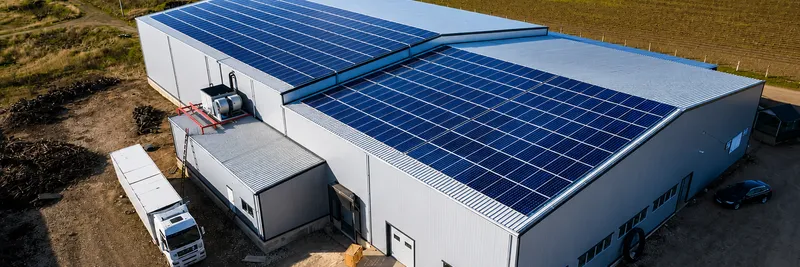
A well-chosen, well-installed rooftop unit lasts for many years. A badly sized one shows up in its first summer.
We measure the building and check the roof, the structure, crane access, the electrical capacity and any existing ductwork if it's a replacement. Site visit and quote without obligation.
Load and air flow calculations, unit selection with the manufacturer's data sheet, options (inverter, EC fans, heat recovery, CO₂ control), duct layout and an itemised quote with a schedule.
Base frame, lift, ductwork, electrics and start-up with a test protocol and air flow balancing. On a closing day or overnight when the business can't stop.
Roof visits, filters, coils, dampers and F-Gas, with 24h priority and a technician who knows your unit. Quoted for your installation and with flexible payment.
Air conditioning and fresh air for a gym of more than 500 m², designed as a single system to cope with peak hour and keep CO₂ under control. Full case study on our blog.
The kind of job we do: an old rooftop unit replaced with one featuring dehumidification and free-cooling, reusing the ductwork, in a single overnight closure.
The kind of job we do: a high air flow rooftop unit with long-throw nozzles for a production warehouse, on a maintenance contract.
A self-contained air conditioning unit installed on the roof: compressors, coils, fans and controls in one machine. It takes in return air and outside air, cools or heats it and delivers it through ducts to the space below. It leaves the factory with the refrigerant charged and needs no indoor units or refrigerant pipes running through the building.
If you have one large space with a roof and you need fresh air (warehouse, supermarket, gym, events hall), a rooftop unit. If you have lots of rooms with different hours and temperatures (hotel, offices, clinic), VRF. If you need chilled water or a lot of central capacity, a chiller. We decide on the site visit with calculations, and explain why. More on our industrial air conditioning page.
It's the first thing we check. A rooftop unit sits on a base frame or supports that spread the load onto the structure, and on lightweight roofs we reinforce the support or place it over columns or beams. If the roof can't take the unit, there are versions for ground-level or plant-room installation.
It means cooling the building with outside air alone whenever it's cooler outside than in, without starting the compressors: the unit opens the outdoor air damper and ventilates. In Malaga it's useful at night and in spring and autumn, especially in gyms and supermarkets that open early. The saving depends on your hours and your building; we estimate it with real data in the proposal.
Usually, yes. We prepare the base frame and the electrics beforehand, and the swap itself (removing the old unit, lifting in the new one and connecting it to the existing ducts) is done on a closing day or overnight. The refrigerant in the old unit is recovered as the regulations require and disposed of as waste.
Because it lives outdoors, at least twice a year: coil and filter cleaning, compressor and fan checks, damper and sensor checks, and F-Gas leak checks according to the charge. On the coast, salt air attacks the condenser and it needs more attention. With an ITAFE PRO Business contract it's all scheduled and logged.
Yes. Rooftop units draw most power in the sunniest hours, which is exactly when a self-consumption plant produces. We design, connect and maintain the solar plant alongside the air conditioning, with panel cleaning, inverter checks and output monitoring on the same contract. See our solar energy page (in Spanish).
Our own technicians travel to every part of the province. Site visit and quote without obligation.
Don't see your town? We cover the whole province of Malaga and travel across Spain for chains and large projects. Ask us about your area →
Tell us about the building, the activity and whether there's an old unit to replace, and we'll prepare a proposal with the unit, its data sheet and an itemised quote. Site visit and quote without obligation.
24h emergencies · 678 167 946 · No-obligation quote